
 Sign in with Facebook
 Sign in with Google
 Sign in with Apple


Top 7 Best Budget Camera Phones in 2026
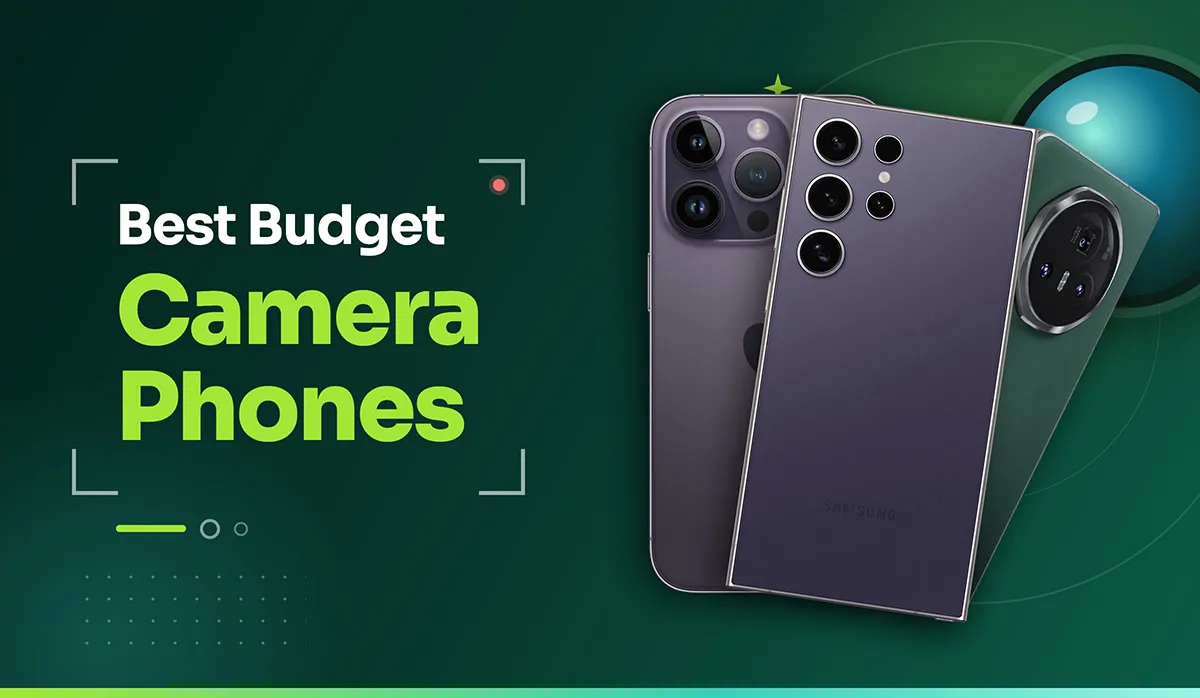
Quick answer: The best camera phone for the money in Australia in 2026 is the refurbished Google Pixel 9 Pro at A$719, which pairs a 50MP main sensor with a true 48MP 5x periscope and the best straight-out-of-camera processing here. For the same cameras and A$80 less, the Google Pixel 8 Pro at A$639 comes with 512GB of storage and is the cheapest phone on this list. For the longest reach, the Oppo Find X8 Pro at A$899 has a 6x optical periscope, and it is the only phone here where all four rear lenses are 50MP. Apple buyers should take the iPhone 15 Pro at A$849, the best iPhone camera on this list and the only phone here that records Log and ProRes straight to external storage. Every phone here is refurbished, professionally graded, and backed by a 12-month warranty from Phonebot, an Australian refurbished-device retailer based in Melbourne. Stock and pricing checked October 2026.
A good camera phone doesn't have to cost two thousand dollars. The trick is to skip new mid-rangers and buy a refurbished flagship from a year or two back instead, because camera hardware is the one thing budget phones genuinely cut. A new A$500 handset almost always pairs a decent main sensor with two near-useless 2MP filler lenses. A refurbished flagship gives you a real telephoto, a larger sensor, and the processing to go with it.
Every phone below was chosen on camera hardware rather than spec-sheet lens counts. All seven have a genuine optical telephoto, not a digital crop, and all are in stock between A$639 and A$949.
Best Camera Phones in 2026
- Honor Magic V3 — from A$949
- Oppo Find X8 Pro 5G — from A$899
- Apple iPhone 15 Pro — from A$849
- Samsung Galaxy S24 Ultra — from A$769
- Google Pixel 9 Pro — from A$719
- Apple iPhone 14 Pro Max — from A$689
- Google Pixel 8 Pro — from A$639
Related Products
![Apple iPhone 14 Pro Max 5G (128GB) [Grade B]](https://www.phonebot.com.au/image/cache/catalog/refurbished/apple/iphone-14/iphone-14-pro/apple-iphone-14-pro-purple-200x170.jpg "Apple iPhone 14 Pro Max 5G (128GB) [Grade B]")
![Apple iPhone 15 Pro 5G (128GB) [Grade A]](https://www.phonebot.com.au/image/cache/catalog/refurbished/apple/iphone-15-pro/apple-iphone-15-pro-black-titanium-200x170.jpg "Apple iPhone 15 Pro 5G (128GB) [Grade A]")
ONLY 1 LEFT
![Google Pixel 8 Pro 5G (512GB) [Grade A]](https://www.phonebot.com.au/image/cache/catalog/refurbished/google/pixel-8-pro/google-pixel-8-pro-obsidian-200x170.jpg "Google Pixel 8 Pro 5G (512GB) [Grade A]")
![Samsung Galaxy S24 Ultra 5G (256GB) [Grade B]](https://www.phonebot.com.au/image/cache/catalog/refurbished/samsung/galaxy-s24-ultra/samsung-galaxy-s24-ultra-titanium-black-200x170.jpg "Samsung Galaxy S24 Ultra 5G (256GB) [Grade B]")
![Google Pixel 9 Pro 5G (128GB) [Grade A]](https://www.phonebot.com.au/image/cache/catalog/refurbished/google/pixel-9-pro-xl/google-pixel-9-pro-xl-obsidian-200x170.jpg "Google Pixel 9 Pro 5G (128GB) [Grade A]")
![Honor Magic V3 5G Dual Sim (512GB) [Grade A]](https://www.phonebot.com.au/image/cache/catalog/refurbished/huawei/honor-magic-v3/honor-magic-v3-velvet-black-200x170.jpg "Honor Magic V3 5G Dual Sim (512GB) [Grade A]")
Best Camera Phones at a Glance
| Phone | Price | Best for | Main camera | Optical zoom | Front camera |
|---|---|---|---|---|---|
| Honor Magic V3 | A$949 | Best foldable camera | 50MP f/1.6 | 3.5x periscope | 20MP + 20MP |
| Oppo Find X8 Pro 5G | A$899 | Longest zoom, all-50MP system | 50MP f/1.6 | 3x + 6x periscope | 32MP |
| Apple iPhone 15 Pro | A$849 | Best iPhone camera | 48MP | 3x telephoto | 12MP TrueDepth |
| Samsung Galaxy S24 Ultra | A$769 | Most detail and cropping room | 200MP | 3x + 5x periscope | 12MP |
| Google Pixel 9 Pro | A$719 | Best overall camera | 50MP f/1.68 | 5x periscope | 42MP |
| Apple iPhone 14 Pro Max | A$689 | Best big-screen iPhone | 48MP | 3x telephoto | 12MP TrueDepth |
| Google Pixel 8 Pro | A$639 | Best value, most storage | 50MP f/1.68 | 5x periscope | 10.5MP |
Google Pixel 9 Pro — Best Camera Phone Overall
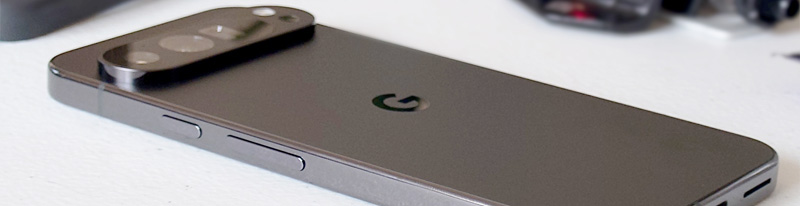
The Google Pixel 9 Pro is the best camera on this page, and it isn't a close call. It pairs a 50MP main sensor on a large 1/1.31-inch chip with a 48MP ultra-wide and a genuine 48MP 5x periscope telephoto, so all three lenses are high resolution rather than dropping off on the secondary cameras.
What separates it is the processing. The Tensor G4 runs Google's full computational photography stack on-device, including Magic Editor, Add Me, Best Take, Night Sight and Video Boost, and the results need less post-editing than anything else here. The 42MP front camera has autofocus and is the highest-resolution selfie camera on this list. Add a 6.3-inch Super Actua display reaching 3,000 nits, IP68, and seven years of OS and security updates running into 2031.
Pros
- Best computational photography in the category, all running on-device
- All three rear lenses are high resolution, at 50MP, 48MP and 48MP
- 42MP front camera with autofocus, the best selfie camera here
- Seven years of OS and security updates, running into 2031
- The only compact flagship on this list at 6.3 inches
Cons
- Tensor G4 trails Snapdragon and Dimensity rivals on sustained performance
- 27W wired charging is the slowest here
- Costs A$80 more than the Pixel 8 Pro for the same rear cameras
Google Pixel 8 Pro — Best Value and Most Storage
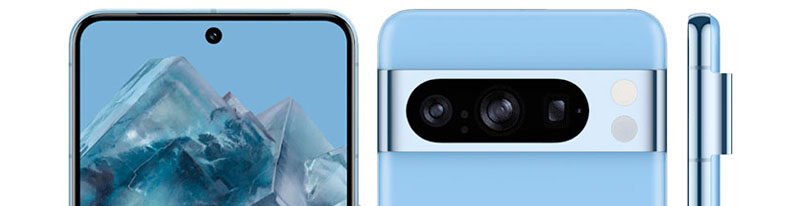
The Pixel 8 Pro is the smartest buy on this list if you don't need the newest Tensor. Its rear camera system is effectively the same as the Pixel 9 Pro's: a 50MP main on the same large 1/1.31-inch sensor, a 48MP ultra-wide with macro focus, and a genuine 48MP 5x periscope. You get Google's processing, Magic Editor, Night Sight, Best Take and Video Boost, for A$639.
The storage is what makes it stand out. At 512GB it has four times the capacity of the base Pixel 9 Pro, which matters more than it sounds for a camera phone, because RAW files and 4K video fill a 128GB phone quickly. Add a 6.7-inch Super Actua display at 2,400 nits, a 5,050mAh battery, Pro manual controls with full shutter and ISO adjustment, IP68, and seven years of updates running into 2030.
Pros
- 512GB of storage, by far the most here, and the cheapest per gigabyte
- Same three-lens system as the Pixel 9 Pro at 50MP, 48MP and 48MP
- Google's full computational photography stack including Video Boost
- Pro manual controls with full shutter and ISO adjustment
- Seven years of updates running into 2030
Cons
- 10.5MP front camera, the weakest selfie camera on this list
- Tensor G3 is a generation behind and misses the Pixel 9 Pro's newer AI features
- 2,400-nit display is dimmer than the Pixel 9 Pro and the Oppo
Not sure which camera suits how you shoot?
Every phone here is 72-point tested, graded, and backed by a 12-month warranty with 30-day returns.
Oppo Find X8 Pro — Longest Optical Zoom
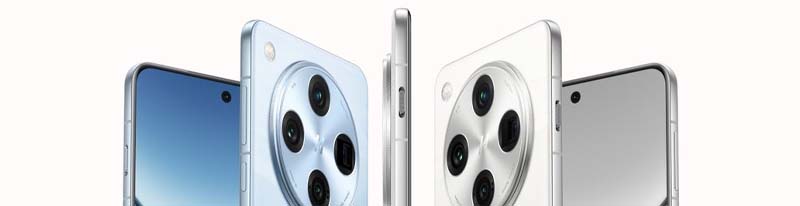
The Oppo Find X8 Pro is the most consistent camera system on this page. Every one of its four rear lenses is 50MP: a 1/1.4-inch main at f/1.6 with OIS, a 50MP ultra-wide, a 50MP 3x periscope, and a second 50MP 6x periscope. No other phone here keeps resolution that high across the whole range, so stepping between focal lengths doesn't drop you onto a weaker sensor.
Two periscopes is genuinely rare, and the 6x reach is the longest optical zoom on this page, backed by a 50MP sensor rather than the low-resolution periscopes most phones pair with that kind of reach. Hasselblad colour tuning handles the processing, and the hardware around it is the strongest here: a MediaTek Dimensity 9400, a 6.78-inch LTPO display peaking at 4,500 nits, a 5,910mAh battery, 80W wired and 50W wireless charging, and an IP68 plus IP69 rating.
Pros
- All four rear lenses are 50MP, unique on this list
- Dual periscope telephotos at 3x and 6x, the longest optical reach here
- Brightest display on this list at 4,500 nits, best for framing in direct sun
- Biggest battery here at 5,910mAh with 80W wired and 50W wireless charging
- IP68 and IP69, the toughest water rating on this page
Cons
- The 6x periscope opens to only f/4.3, so it needs good light
- ColorOS photo editing is less developed than Google's or Samsung's
- Shorter update window than the Pixel and Samsung phones here
Samsung Galaxy S24 Ultra — Most Detail and Cropping Room
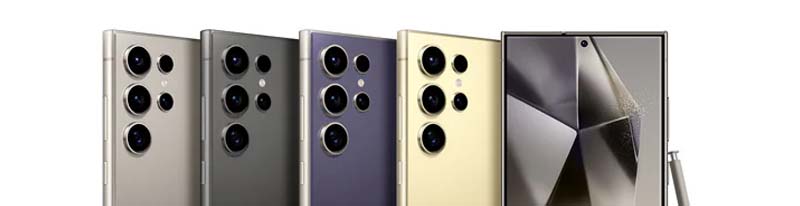
The Galaxy S24 Ultra gives you the most room to crop. Its 200MP main sensor is joined by a 50MP 5x periscope, a 10MP 3x telephoto and a 12MP ultra-wide, so you have four genuinely distinct focal lengths rather than one good lens and some padding. Space Zoom reaches 100x digitally, and the 5x periscope's 50MP resolution gives it far more cropping headroom than the 10MP periscopes Samsung used on earlier Ultra models.
Beyond the cameras it's a complete flagship. The Snapdragon 8 Gen 3 for Galaxy handles heavy editing without throttling, the 6.8-inch QHD+ display sits behind Gorilla Armor with a strong anti-reflective coating, and the titanium frame and built-in S Pen carry the full Ultra experience. Seven years of OS and security updates match the Pixels.
Pros
- 200MP quad camera with dual telephoto lenses at 3x and 5x
- 50MP periscope gives far more cropping headroom than older 10MP zooms
- Snapdragon 8 Gen 3 for Galaxy handles heavy photo and video editing
- Titanium frame, built-in S Pen, Gorilla Armor display
- Seven years of OS and security updates
Cons
- Samsung's processing can oversaturate daylight shots next to the Pixel
- 45W charging is slower than the Oppo and Honor here
- Costs A$50 more than the Pixel 9 Pro for weaker processing
Apple iPhone 15 Pro — Best iPhone Camera
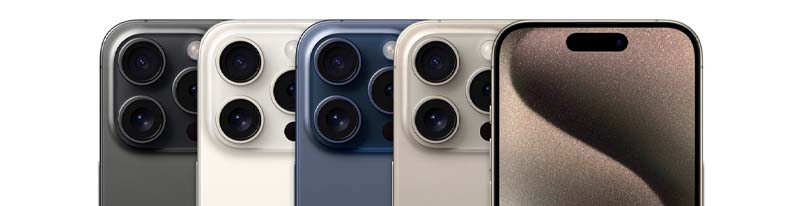
The iPhone 15 Pro is the best iPhone camera on this list. Its 48MP main sensor shoots 24MP by default, which holds detail without the file sizes of a full 48MP frame, and Apple lets you set your default focal length from that one lens at 24mm, 28mm or 35mm, so you frame properly instead of cropping afterwards.
Alongside it sit a 12MP ultra-wide with macro and a 12MP 3x telephoto at 77mm, plus a 2x crop at 48mm, giving four usable focal lengths from three lenses. For video it's the strongest phone here: Log recording, and ProRes at 4K 60 written straight to external storage over USB-C at 10Gbps, which no other phone on this page can do. The A17 Pro also makes it the only iPhone here that supports Apple Intelligence, and at 187g in titanium it is by far the lightest phone on this list.
Pros
- 48MP main shooting 24MP by default, with 24mm, 28mm and 35mm framing options
- Four usable focal lengths from three lenses, including a 2x crop at 48mm
- Log and ProRes 4K 60 recorded straight to external storage over USB-C
- The only iPhone here that supports Apple Intelligence
- Lightest phone on this list at 187g in titanium
Cons
- 3x telephoto is the shortest optical reach here, tied with the 14 Pro Max
- 12MP ultra-wide and telephoto are low-resolution next to the Pixel and Oppo
- 23 hours of video playback, six fewer than the cheaper 14 Pro Max
Apple iPhone 14 Pro Max — Best Big-Screen iPhone
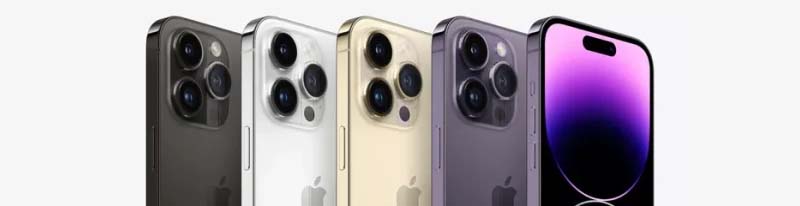
The iPhone 14 Pro Max is the cheaper of the two iPhones here, and the one to take if you want the bigger screen and the longer battery. It was the generation where Apple moved the Pro line to a 48MP main sensor. That was a significant jump in detail and cropping headroom over every iPhone before it, and it brought a 2x crop mode that behaves like an extra lens without adding one.
Alongside it sit a 12MP ultra-wide with macro and a 12MP 3x telephoto, plus ProRAW and ProRes video for anyone who edits properly. The 6.7-inch ProMotion display with always-on is 0.6 inches larger than the 15 Pro's, and battery life is rated to 29 hours of video playback against the 15 Pro's 23, for A$160 less.
Pros
- First Pro generation with a 48MP main sensor, a large jump in detail
- 2x crop mode effectively adds a fourth focal length
- ProRAW and ProRes video for serious editing
- 6.7-inch display, larger than the iPhone 15 Pro's 6.1 inches
- 29 hours of video playback, six more than the 15 Pro, for A$160 less
Cons
- Telephoto is 12MP and reaches only 3x, tied with the 15 Pro for the shortest zoom here
- No Apple Intelligence on this generation, unlike the 15 Pro
- Lightning rather than USB-C, and the heaviest phone here at 240g
Honor Magic V3 — Best Foldable Camera
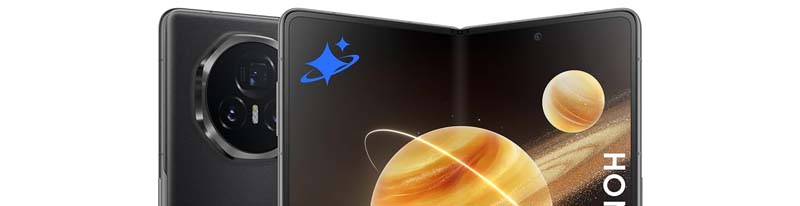
The Honor Magic V3 is the only foldable on this list, and it offers something no slab phone here can: a 7.92-inch viewfinder. Shooting on a screen that size changes how you frame and review images, and the cover display lets you shoot selfies using the full rear camera array rather than a front sensor, which produces far better results.
The hardware backs it up. A 50MP periscope telephoto joins a 50MP main with f/1.6 and OIS at 3.5x optical zoom, which is real reach that most foldables lack entirely, plus a 40MP ultra-wide with autofocus for close-up work. At 9.2mm folded and 226g it stays practical to carry on a shoot, and the hinge is rated for 500,000 folds.
Pros
- 7.92-inch inner display, by far the largest viewfinder on this list
- 50MP periscope telephoto at 3.5x, rare on any foldable
- Cover screen lets you shoot selfies on the full rear camera array
- Thinnest book-style foldable of its generation at 9.2mm folded
- Snapdragon 8 Gen 3 with 66W wired and 50W wireless charging
Cons
- Most expensive phone on this list at A$949
- MagicOS photo editing is less developed than Google's or Samsung's
- IPX8 covers water but carries no official dust rating
What Actually Matters in a Camera Phone
Ignore the lens count. Plenty of new phones under A$500 advertise three or four rear cameras, but two of them are usually 2MP macro and depth sensors that contribute almost nothing. A phone with two good lenses beats one with four where two are filler. Every phone on this list has at least three genuinely useful cameras.
Optical zoom is the real dividing line. Digital zoom is just cropping, and it falls apart quickly. A real telephoto is the single feature budget phones cut first, which is why a refurbished flagship beats a new mid-ranger at the same price. Every phone here has one.
Sensor size beats megapixels. A large sensor gathers more light, which is what determines low-light performance. This is why the Pixel's 50MP main outshoots plenty of 108MP mid-rangers after dark.
Processing does half the work. Two phones with identical sensors can produce very different images. Google's computational photography is the strongest in the category, which is the main reason the two Pixels top this list despite not having the biggest numbers.
Check the storage. RAW files and 4K video fill a phone fast. The Pixel 8 Pro's 512GB is the most here and the cheapest per gigabyte, which matters if you shoot a lot.
Check the update window. Camera features arrive through software updates, so a phone still receiving them keeps improving. The Pixel 9 Pro, Pixel 8 Pro and Galaxy S24 Ultra all carry seven-year commitments.
Which Camera Phone Should You Buy?
Choose the Google Pixel 9 Pro if you want the best photos straight out of the camera with no editing, the best selfie camera, and the longest software support. It's the pick for most people.
Choose the Google Pixel 8 Pro if you want those same rear cameras for A$80 less and would rather spend the difference on storage. Its 512GB is the most of any phone here.
Choose the Oppo Find X8 Pro if you shoot distant subjects. Its 6x periscope is the longest optical reach on this page, every lens is equally strong at 50MP, and it has the brightest screen and the biggest battery here.
Choose the Galaxy S24 Ultra if you crop heavily and want the 200MP sensor, the S Pen, and four focal lengths.
Choose the iPhone 15 Pro if you're on iOS and shoot video seriously. Log and ProRes written straight to external storage over USB-C is something no other phone here offers.
Choose the iPhone 14 Pro Max if you want an iPhone with a bigger screen and longer battery, and you'd rather save A$160.
Choose the Honor Magic V3 if you want a large viewfinder and the ability to shoot selfies on the main camera.
Free delivery Australia-wide, battery health verified to 80% or better, and 30-day returns on every device.
Posted by Liam Harris


Liam Harris
Liam Harris is a tech writer at Phonebot, covering refurbished phones, tablets and wearables since 2022. His buying guides and model comparisons draw on live Australian market pricing and Phonebot's experience rehoming over one million devices.
-688x400.jpg "Best Android Phones 2026 – Expert Reviews & Top Choices")



 Google
 Apple
Apple Facebook