
 Sign in with Facebook
 Sign in with Google
 Sign in with Apple


Best Camera Phones for Photography in 2026 (Australia)
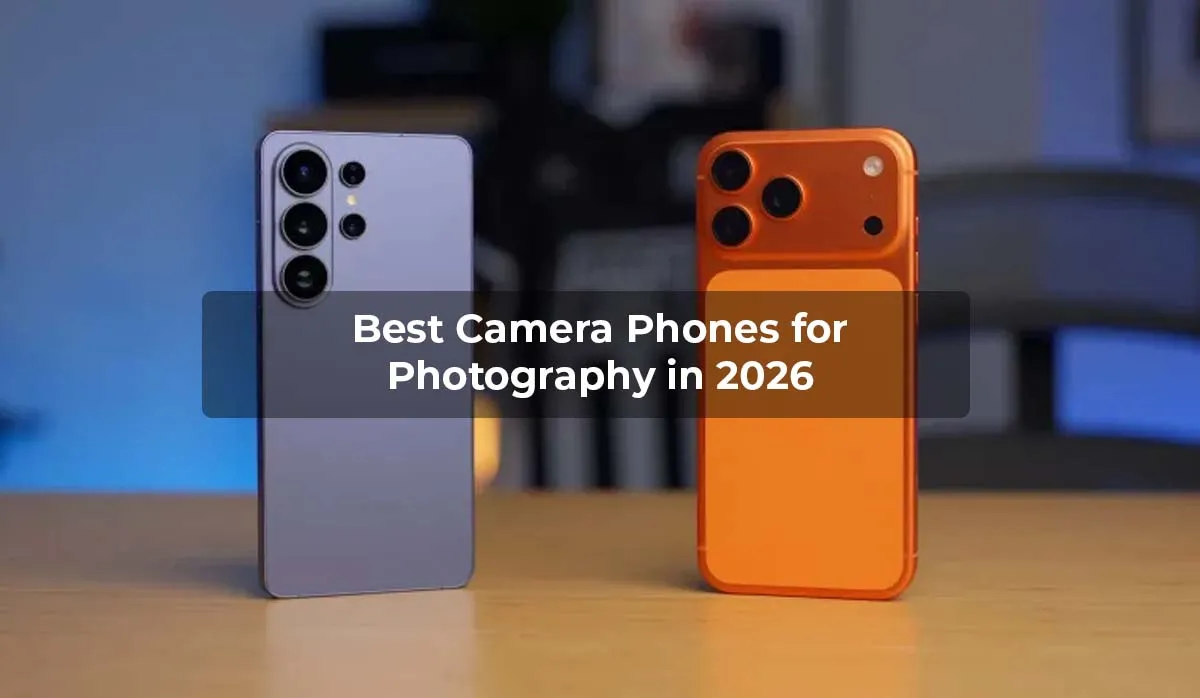
Quick answer: The best camera phone in Australia is the refurbished Apple iPhone 17 Pro Max at A$1,699, which holds the top DxOMark score of any 2026 smartphone and the most capable video toolkit on the market. The best Android camera is the Samsung Galaxy S26 Ultra at A$1,349, with a 200MP f/1.4 sensor and dual telephoto lenses. The best compact flagship is the Google Pixel 11 Pro at A$1,249, which packs a 5x periscope and the strongest computational photography into a 6.3-inch body. The best value is the Honor Magic V3 at A$999, the cheapest phone here and the only one under A$1,000 with a periscope telephoto and a 7.92-inch viewfinder.
Smartphones have closed the gap on dedicated cameras in 2026. Flagship phones now ship with 200MP sensors, periscope telephoto lenses, AI zoom up to 120x, and ProRes Log video that competes with entry-level mirrorless setups. For photographers and content creators in Australia, picking the best camera phone comes down to matching the right sensor, lens system, and processing stack to how you shoot, not chasing the highest megapixel count.
We've tested the most capable camera phones available in Australia, weighing image quality, low-light performance, zoom range, and video capability. Whether you want the strongest iPhone for video, the most versatile Samsung camera phone for zoom, or a refurbished flagship at half the brand-new price, there's a pick below for every type of shooter.
Best Camera Phones in 2026
Apple, Samsung, and Google still lead the camera phone market in 2026, but Honor has closed the gap with two foldables that turn the viewfinder itself into an advantage. Each phone below earns its spot for a different reason, so you can choose based on how you shoot.
Top 7 camera phones in Australia for 2026:
- Apple iPhone 17 Pro Max — from A$1,699
- Honor Magic V5 — from A$1,549
- Samsung Galaxy S26 Ultra — from A$1,349
- Apple iPhone 16 Pro Max — from A$1,299
- Google Pixel 11 Pro — from A$1,249
- Samsung Galaxy S25 Ultra — from A$1,049
- Honor Magic V3 — from A949
Related Products
![Apple iPhone 16 Pro Max 5G (256GB) [Grade A]](https://www.phonebot.com.au/image/cache/catalog/refurbished/apple/iphone-16-pro/apple-iphone-16-pro-desert-titanium-200x170.jpg "Apple iPhone 16 Pro Max 5G (256GB) [Grade A]")
![Honor Magic V3 5G Dual Sim (512GB) [Grade A]](https://www.phonebot.com.au/image/cache/catalog/refurbished/huawei/honor-magic-v3/honor-magic-v3-velvet-black-200x170.jpg "Honor Magic V3 5G Dual Sim (512GB) [Grade A]")
![Samsung Galaxy S26 Ultra 5G (256GB) [Like New]](https://www.phonebot.com.au/image/cache/catalog/refurbished/samsung/galaxy-s26-ultra/samsung-galaxy-s26-ultra-sky-blue-200x170.jpg "Samsung Galaxy S26 Ultra 5G (256GB) [Like New]")
![Samsung Galaxy S25 Ultra 5G (256GB) [Grade B]](https://www.phonebot.com.au/image/cache/catalog/refurbished/samsung/galaxy-s25-ultra/samsung-galaxy-s25-ultra-titanium-black-200x170.jpg "Samsung Galaxy S25 Ultra 5G (256GB) [Grade B]")
ONLY 1 LEFT
![Honor Magic V5 5G (512GB) [Grade A]](https://www.phonebot.com.au/image/cache/catalog/refurbished/huawei/honor-magic-v5/honor-magic-v5-black-200x170.jpg "Honor Magic V5 5G (512GB) [Grade A]")
ONLY 1 LEFT
![Google Pixel 11 Pro 5G (256GB) [Open Box]](https://www.phonebot.com.au/image/cache/catalog/refurbished/google/pixel-11-pro/google-pixel-11-pro-fog-200x170.jpg "Google Pixel 11 Pro 5G (256GB) [Open Box]")
ONLY 1 LEFT
Best Camera Phones at a Glance
| Phone | Price | Best for | Main sensor | Optical zoom | Front camera |
|---|---|---|---|---|---|
| Apple iPhone 17 Pro Max | A$1,699 | Best overall, best video | 48MP Fusion | 8x tetraprism | 18MP Center Stage |
| Honor Magic V5 | A$1,549 | Best foldable camera | 50MP f/1.6 | 3x periscope (64MP) | 20MP + 20MP |
| Samsung Galaxy S26 Ultra | A$1,349 | Best zoom, best Android | 200MP f/1.4 | 3x + 5x periscope | 12MP |
| Apple iPhone 16 Pro Max | A$1,299 | Best iPhone value | 48MP Fusion | 5x periscope | 12MP |
| Google Pixel 11 Pro | A$1,249 | Best compact, best AI editing | 50MP | 5x periscope | 42MP autofocus |
| Samsung Galaxy S25 Ultra | A$1,049 | Best Samsung value | 200MP f/1.7 | 3x + 5x periscope | 12MP |
| Honor Magic V3 | A$999 | Best value | 50MP f/1.6 | 3.5x periscope | 20MP + 20MP |
Apple iPhone 17 Pro Max

The Apple iPhone 17 Pro Max holds the top DxOMark score of any smartphone in 2026. The biggest change this year is the 48MP tetraprism telephoto, which jumps from 5x to 8x optical zoom while keeping the full 48MP resolution across every focal length. Pair that with ProRes Log, Apple Log 2, and the new Center Stage square selfie sensor, and it's the most flexible iPhone for video work to date. For photographers who want reliable point-and-shoot results, this is the safest pick.
If you want the same camera system in a smaller body, the iPhone 17 Pro carries identical rear cameras and the same A19 Pro chip in a 6.3-inch frame, trading only screen size, battery life, and maximum storage.
Key Features:
- Display: 6.9-inch Super Retina XDR LTPO OLED, ProMotion 120Hz, up to 3,000 nits peak outdoor brightness.
- Processor / RAM: Apple A19 Pro chip (3nm) with 12GB RAM and a new vapor chamber cooling system.
- Battery & Charging: Largest-ever iPhone battery rated for 39 hours of video playback, with 40W MagSafe wireless and 60W wired charging.
- Camera: Triple 48MP system, 48MP Fusion main (f/1.8, 24mm), 48MP ultrawide (f/2.2), and 48MP tetraprism telephoto (100mm, f/2.8, 8x optical zoom), plus an 18MP square Center Stage front camera.
- Storage: 256GB, 512GB, 1TB or 2TB internal storage.
- Water Resistance: IP68 rated with a new aluminium unibody design.
Pros:
- Highest DxOMark score (168) of any 2026 smartphone, with natural image processing that needs less post-editing than the Samsung output.
- 8x optical zoom tetraprism telephoto is the longest focal length ever fitted to an iPhone and beats Samsung's periscope reach.
- ProRes Log, Apple Log 2, Dolby Vision HDR, and Spatial Video make it the most capable 4K camera phone for video creators.
- Full 48MP resolution is retained across every focal length, so zoomed shots hold detail rather than cropping.
Cons:
- The most expensive phone on this list, at A$350 more than the Galaxy S26 Ultra.
- Tetraprism zoom housing makes the camera bump larger and heavier than the iPhone 16 Pro Max.
- Higher storage tiers add significantly to the price if you shoot ProRes.
Honor Magic V5

The Honor Magic V5 is the best camera on a foldable and the thinnest book-style foldable you can buy, at 8.8mm folded and 217g. That combination matters more than the spec sheet suggests, because it makes a large-viewfinder camera something you'd actually carry all day rather than leave at home.
The headline camera feature is the 64MP Ultra Sensing periscope telephoto, which is a far higher-resolution zoom sensor than any other foldable fits and more pixels than most slab flagships give their telephoto. Alongside it sit a 50MP main and a 50MP ultrawide, so all three rear lenses are high-resolution rather than dropping off on the secondary cameras. Both the 7.95-inch inner display and the 6.45-inch cover screen hit 5,000 nits, which makes reviewing shots in direct Australian sun easier than on anything else here.
Key Features:
- Display: 7.95-inch foldable LTPO OLED (2352 × 2172) plus a 6.45-inch cover display, both rated at 5,000 nits peak HDR brightness with stylus support.
- Processor / RAM: Snapdragon 8 Elite (3nm) with up to 16GB RAM.
- Battery & Charging: 5,820mAh silicon-carbon battery using the industry's first 15% silicon content, with 66W wired and 50W wireless charging.
- Camera: Triple rear system, 50MP main (f/1.6) with OIS, 50MP ultrawide, and 64MP Ultra Sensing periscope telephoto, plus 20MP inner and 20MP cover selfie cameras.
- Storage: 256GB, 512GB or 1TB internal storage.
- Water Resistance: IP58 and IP59 rated, with a shield-grade steel hinge tested to 500,000 folds.
Pros:
- 64MP periscope telephoto is the highest-resolution zoom sensor on any foldable here, holding detail where rivals crop.
- Thinnest book-style foldable at 8.8mm folded and 217g, so the large viewfinder costs you almost nothing in portability.
- Dual 5,000-nit displays are the brightest on this list, which matters for framing and reviewing outdoors.
- IP58 and IP59 ratings cover both dust and high-pressure water, unusual protection for a foldable.
Cons:
- MagicOS photo editing tools are less developed than Galaxy AI or Google's Pixel suite.
- Update window is shorter than the seven-year commitments from Samsung, Google, and Apple.
- Second most expensive phone here, and a foldable body is not for everyone.
Samsung Galaxy S26 Ultra
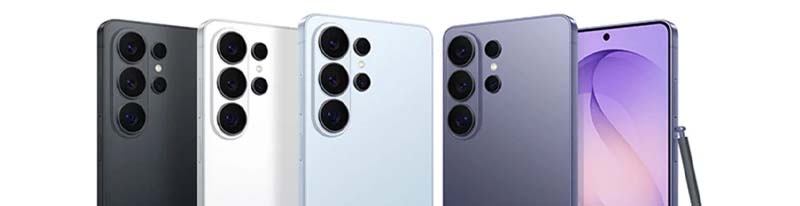
The Samsung Galaxy S26 Ultra has the most versatile camera system of any Android slab phone in Australia. The 200MP main sensor now opens to f/1.4, the 5x periscope telephoto uses Samsung's new All Lens On Prism (ALoP) mechanism for sharper long-range shots, and the imaging pipeline runs on the Snapdragon 8 Elite Gen 5 for Galaxy with on-device AI. For zoom photography, astrophotography, and detailed daylight shots, this is the Android benchmark.
Key Features:
- Display: 6.9-inch Dynamic LTPO AMOLED 2X at 1–120Hz with 2,600 nits peak brightness and a built-in Privacy Display.
- Processor / RAM: Snapdragon 8 Elite Gen 5 for Galaxy (3nm) with 12GB or 16GB LPDDR5X RAM.
- Battery & Charging: 5,000mAh battery rated for 31 hours of video playback, with 60W wired and 25W Qi2.2 wireless charging.
- Camera: Quad-camera system, 200MP main (f/1.4), 50MP ultrawide, 10MP 3x telephoto, and 50MP 5x periscope (f/2.9) with new ALoP mechanism.
- Storage: 256GB, 512GB, or 1TB internal storage.
- Water Resistance: IP68 rated with an Armor Aluminum frame and Gorilla Armor 2 glass.
Pros:
- 200MP main sensor with an f/1.4 aperture captures more light than any previous Galaxy, improving low-light and night photography.
- Dual telephoto setup (3x optical + 5x periscope) gives the widest zoom range on Android.
- Galaxy AI tools, Photo Assist, Generative Edit, and 4K video at 60fps cover most content creation needs.
- Seven years of OS and security updates keep the imaging software current through 2033.
Cons:
- Heavy processing and sharpening can make daylight shots look oversaturated compared to the iPhone.
- 60W wired charging is faster than past Ultras but still trails the Honor foldables here.
- S Pen no longer supports Bluetooth, so remote camera shutter control is gone.
Apple iPhone 16 Pro Max
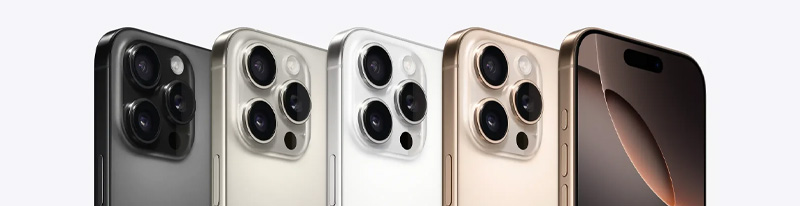
The Apple iPhone 16 Pro Max is one of the best phones for photography you can buy in 2026, especially as a refurbished iPhone at well below current-gen pricing. It introduced Apple's first 5x periscope telephoto on the larger Pro Max, the dedicated Camera Control button, and the Photonic Engine with Smart HDR 5. For buyers who want the iPhone camera experience without paying iPhone 17 Pro Max prices, this is the value pick of the iPhone lineup, and it costs A$400 less.
Key Features:
- Display: 6.9-inch Super Retina XDR LTPO OLED, ProMotion 120Hz, up to 2,000 nits peak outdoor brightness.
- Processor / RAM: Apple A18 Pro chip with 8GB RAM, optimised for Apple Intelligence and computational photography.
- Battery & Charging: Up to 33 hours of video playback, with 25W MagSafe wireless and fast wired charging support.
- Camera: Triple system, 48MP Fusion main (f/1.78), 48MP ultrawide with autofocus and macro, and 12MP 5x periscope telephoto (120mm, f/2.8), plus 12MP TrueDepth front.
- Storage: 256GB, 512GB, or 1TB internal storage.
- Water Resistance: IP68 rated with a titanium frame.
Pros:
- 5x periscope telephoto with 25x digital zoom offers long-reach photography at a lower refurbished price.
- Dedicated Camera Control button doubles as a physical shutter and exposure dial.
- Photonic Engine and Smart HDR 5 produce natural-looking 4K camera phone footage with strong dynamic range.
- ProRes video, Dolby Vision HDR, and Cinematic Mode all carry over from the Pro lineup.
Cons:
- Telephoto maxes out at 12MP, well below the full 48MP zoom output on the iPhone 17 Pro Max.
- Battery life and brightness fall behind the iPhone 17 Pro Max, especially under direct sunlight.
- No Apple Log 2 or Center Stage square selfie sensor, both are iPhone 17 Pro exclusives.
Google Pixel 11 Pro
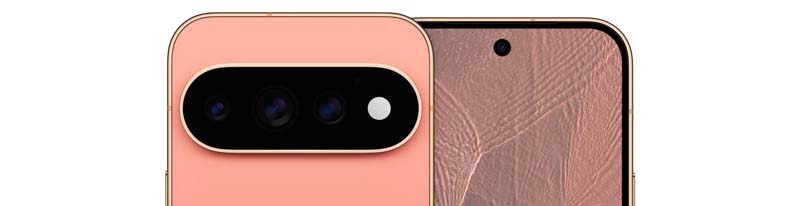
The Google Pixel 11 Pro is the best camera you can get in a phone you can actually use one-handed. Compact flagships with serious cameras have almost disappeared, and at 6.3 inches and 204g, this is the only phone on this list that fits that brief without cutting the camera system down to match.
Google's upgrade this year went into the telephoto. The 5x periscope uses a sensor 71% larger than the previous generation, which is what lets Pro Res Zoom push usable output all the way to 120x. Behind it sits the 2nm Tensor G6, which runs Magic Editor, Best Take, Add Me, and Audio Magic Eraser entirely on-device. The 3,600-nit Super Actua display is the second brightest here, and Google commits to seven years of OS, security and Feature Drop updates, so the camera keeps gaining capability long after you buy it.
Key Features:
- Display: 6.3-inch Super Actua LTPO OLED (1280 × 2856) at 1–120Hz with 3,600 nits peak HDR brightness.
- Processor / RAM: Google Tensor G6 (2nm, TSMC) with 12GB or 16GB RAM, built for on-device Gemini AI.
- Battery & Charging: 4,850mAh battery with 30W wired and 25W Qi2.2 Pixelsnap magnetic wireless charging.
- Camera: Triple rear system built around a 50MP main and a 5x optical periscope telephoto with a 71% larger sensor, plus Pro Res Zoom to 120x and a 42MP autofocus front camera.
- Storage: 256GB, 512GB, or 1TB internal storage.
- Water Resistance: IP68 rated, with an under-display ultrasonic fingerprint sensor.
Pros:
- Only compact phone here with a true 5x optical periscope, so you keep reach without carrying a 6.9-inch body.
- 42MP autofocus front camera is the best selfie camera on this list, more than double the resolution of the next closest.
- Google's on-device AI editing suite is the most useful in the category, and it all runs without a network connection.
- Seven years of OS, security and Feature Drop updates, matched only by Samsung here.
Cons:
- Tensor G6 still trails Snapdragon and Apple silicon in raw benchmarks, though efficiency is much improved.
- 30W wired charging is the slowest on this list by a wide margin.
- 4,850mAh battery is smaller than the Ultras and foldables here, a consequence of the compact body.
Samsung Galaxy S25 Ultra
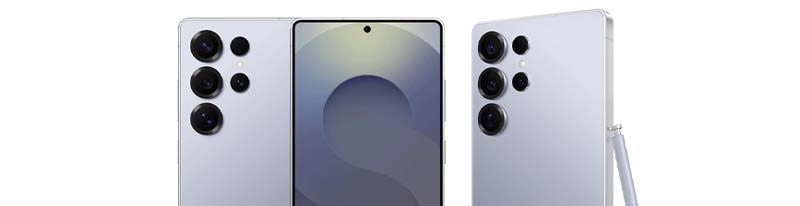
The Samsung Galaxy S25 Ultra still ranks among the top phones for photography in 2026, and at its current price in our refurbished Samsung phones collection, it's strong value for anyone wanting flagship Samsung camera capabilities without paying S26 Ultra prices. The 200MP main sensor is the same unit that headlines the Galaxy Z Fold 7, and the quad-camera array with dual telephoto lenses covers a zoom range few phones can match.
Key Features:
- Display: 6.9-inch QHD+ Dynamic AMOLED 2X, 1–120Hz adaptive refresh rate, Gorilla Armor 2 protection.
- Processor / RAM: Snapdragon 8 Elite for Galaxy with 12GB or 16GB RAM, the first 3nm chip tuned for Galaxy devices.
- Battery & Charging: 5,000mAh battery rated for up to 31 hours of video playback, with 45W wired and 15W wireless charging.
- Camera: Quad-camera system, 200MP main, 50MP ultrawide, 10MP 3x telephoto, and 50MP 5x periscope telephoto.
- Storage: 256GB, 512GB, or 1TB internal storage.
- Water Resistance: IP68 rated with a titanium frame and Gorilla Armor 2.
Pros:
- 200MP main sensor with dual telephoto setup remains one of the most flexible camera arrays on Android, a year after launch.
- Built-in S Pen is still the only flagship stylus on a top camera phone, useful for marking up shots and editing in the gallery.
- Galaxy AI suite, Photo Assist, Generative Edit and Live Translate, is identical to what the S26 Ultra ships with.
- 8K at 30fps and 4K at 120fps make this a serious 4K camera phone alternative at last-gen pricing.
Cons:
- Main camera aperture stays at f/1.7, narrower than the S26 Ultra's f/1.4, so low-light shots are slightly dimmer.
- Snapdragon 8 Elite for Galaxy is one generation behind the S26 Ultra's 8 Elite Gen 5.
- Newer Galaxy AI features rolling out on the S26 Ultra may not all reach the S25 Ultra.
Honor Magic V3
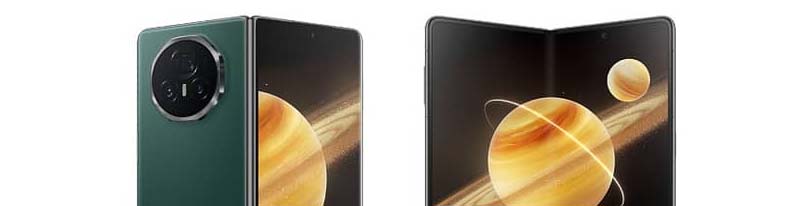
The Honor Magic V3 is the best value on this list, and it isn't close. At A$999 it's the only phone here under A$1,000, yet it gives you a 7.92-inch viewfinder and a genuine periscope telephoto, neither of which you'll find at this price anywhere else. Shooting on a screen that size changes how you frame and review images, and the cover display lets you use the main rear cameras for selfies, which produces far better results than any front-facing sensor.
The hardware backs it up. A 50MP main with f/1.6 and OIS is joined by a 50MP periscope telephoto at 3.5x optical zoom, plus a 40MP ultrawide with autofocus for close-up work. All of that sits in a body just 9.2mm thick folded and 226g, so it's a foldable you'd actually carry on a shoot.
Key Features:
- Display: 7.92-inch foldable LTPO AMOLED (2156 × 2344) at 120Hz with 1,800 nits peak brightness, Dolby Vision and HDR10+, plus a 6.43-inch 120Hz OLED cover display.
- Processor / RAM: Snapdragon 8 Gen 3 (4nm) with 12GB or 16GB RAM.
- Battery & Charging: 5,150mAh silicon-carbon battery with 66W wired and 50W wireless charging.
- Camera: Triple rear system, 50MP main (f/1.6) with OIS, 50MP periscope telephoto with 3.5x optical zoom and OIS, and 40MP ultrawide with autofocus, plus 20MP inner and 20MP cover selfie cameras.
- Storage: 512GB or 1TB internal storage.
- Water Resistance: IPX8 rated, with a 7-series aluminium alloy frame and a hinge tested to 500,000 folds.
Pros:
- Cheapest phone on this list while still offering a 7.92-inch viewfinder and a 3.5x periscope telephoto.
- 50MP periscope telephoto gives it real reach, which most foldables lack entirely.
- Cover screen lets you shoot selfies with the full rear camera array rather than a front sensor.
- At 9.2mm folded it stays practical to carry all day.
Cons:
- MagicOS photo editing tools are less developed than Galaxy AI or Google's Pixel tools.
- IPX8 covers water submersion but carries no official dust rating, which matters outdoors.
- Update window is shorter than the seven-year commitments from Samsung, Google, and Apple.
Final Thoughts
The best camera phone for you depends on how you shoot. For reliable point-and-shoot results and the strongest video, the iPhone 17 Pro Max is the safest pick, though the iPhone 16 Pro Max gets you most of the way there for A$400 less. For zoom flexibility and the most versatile Samsung camera phone, the Galaxy S26 Ultra is the Android benchmark, with the S25 Ultra offering nearly the same array for A$300 less. If you want a serious camera in a phone you can use one-handed, the Pixel 11 Pro is the only compact flagship here with a true 5x periscope and the best selfie camera on the list. And for a genuinely different way of shooting, the two Honor foldables turn the viewfinder itself into the feature: the Magic V5 pairs a 64MP periscope with dual 5,000-nit screens, while the Magic V3 at A$999 is the standout value of this list.
You don't always need to buy brand-new to get a flagship-grade camera. A refurbished iPhone 16 Pro Max or Galaxy S25 Ultra can match most of the latest models at a lower price. For more options, check our full guide to the best Android camera phones, or for more affordable picks, our best budget camera phones roundup. Browse Phonebot's full collection to find your next camera phone.
Posted by Liam Harris


Liam Harris
Liam Harris is a tech writer at Phonebot, covering refurbished phones, tablets and wearables since 2022. His buying guides and model comparisons draw on live Australian market pricing and Phonebot's experience rehoming over one million devices.



 Google
 Apple
Apple Facebook