
 Sign in with Facebook
 Sign in with Google
 Sign in with Apple


iPhone 14 vs iPhone 17 Series: What’s Changed and Is the Upgrade Worth It?
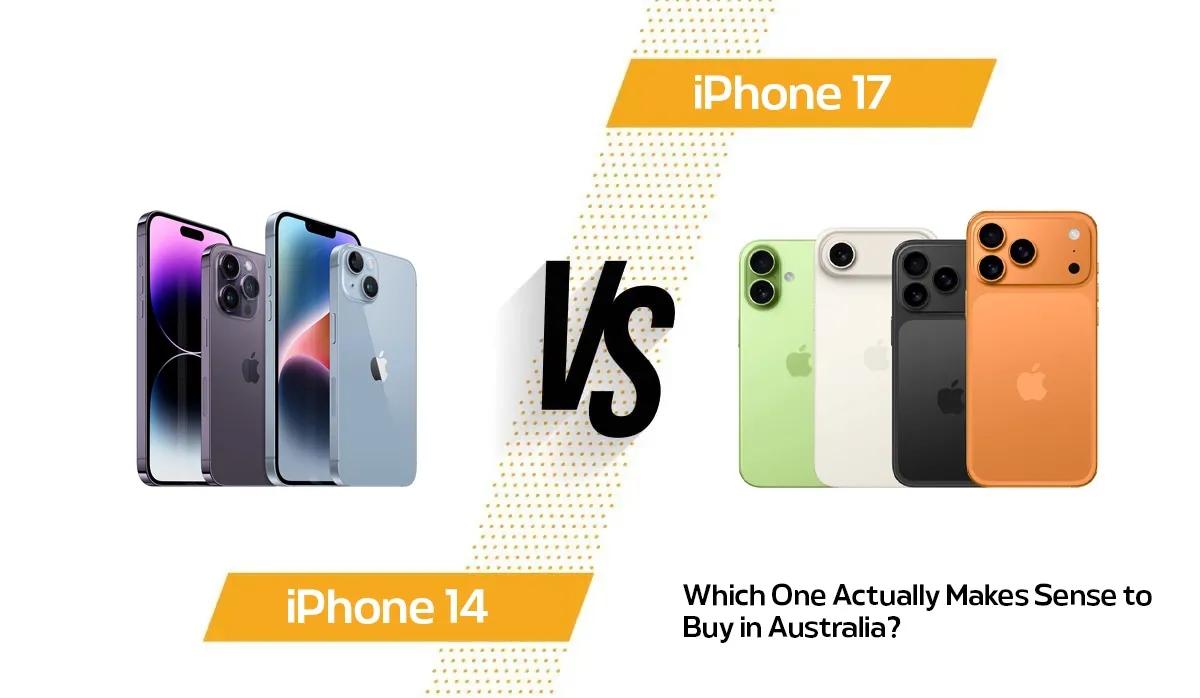
Apple’s iPhone lineup continues to evolve, and by 2026, buyers in Australia are often stuck choosing between a proven older model and a newer generation packed with refinements. The iPhone 14, released in 2022, remains a popular choice for users who want stable performance and a lower price. On the other hand, the iPhone 17 introduces noticeable improvements in display, performance, and long-term usability.
While both phones share Apple’s familiar design language and ecosystem, they are aimed at slightly different users. The iPhone 14 focuses on value and reliability, while the iPhone 17 targets those who want smoother visuals and longer software relevance. If you are unsure which one fits your needs better, this detailed iPhone 14 vs iPhone 17 comparison breaks everything down clearly.
iPhone 14 vs iPhone 17: Release Date
The iPhone 14 was introduced in September 2022 and has been on the market for several years. By 2026, it is a well-established model with mature software support and stable performance.
The iPhone 17 was released in late 2025 as part of Apple’s newer lineup. It represents the latest generation and benefits from newer hardware, updated features, and a longer update cycle.
The release gap explains why both phones target different types of buyers in 2026.
iPhone 14 vs iPhone 17: Release Date and Price in Australia
The iPhone 14 was launched in September 2022 and quickly became one of Apple’s best-selling models worldwide. In Australia, it originally entered the market at a premium price, but by 2026, its cost has dropped significantly. This makes it attractive to buyers who want an iPhone experience without paying top dollar.
Related Products
![Apple iPhone 14 Pro Max 5G (128GB) [Like New]](https://www.phonebot.com.au/image/cache/catalog/refurbished/apple/iphone-14/iphone-14-pro/apple-iphone-14-pro-purple-200x170.jpg "Apple iPhone 14 Pro Max 5G (128GB) [Like New]")
ONLY 1 LEFT
![Apple iPhone 14 Plus 5G (256GB) [Like New]](https://www.phonebot.com.au/image/cache/catalog/refurbished/apple/iphone-14/iphone-14-plus/midnight-200x170.jpg "Apple iPhone 14 Plus 5G (256GB) [Like New]")
ONLY 1 LEFT
ONLY 1 LEFT
ONLY 1 LEFT
![Apple iPhone 14 Pro 5G (512GB) [Grade A]](https://www.phonebot.com.au/image/cache/catalog/refurbished/apple/iphone-14/iphone-14-pro/Iphone-14-pro-200x170.jpg "Apple iPhone 14 Pro 5G (512GB) [Grade A]")
The iPhone 17 arrived in late 2025 as part of Apple’s newer generation. With upgraded hardware and longer software support, it naturally commands a higher price. Australian buyers looking at the iPhone 17 are usually paying more upfront, but they are also investing in a device that will stay relevant for several more years.
For those who find brand-new pricing hard to justify, refurbished options provide a practical alternative. A refurbished iPhone 14 or iPhone 17 allows buyers to access Apple hardware at a lower cost while still getting reliable performance.
iPhone 14 vs iPhone 17: Design and Build
Apple did not dramatically change its design language between these generations, but small refinements are noticeable.
The iPhone 14 features a clean, flat-edge design with an aluminium frame and glass back. It feels solid in hand and remains comfortable for everyday use. The camera layout is familiar and unobtrusive, blending well into the overall design.
The iPhone 17 keeps the same general shape but refines it. Bezels are slimmer, and the phone feels slightly more modern when placed side by side with the iPhone 14. While the size difference is minor, the iPhone 17’s design feels more current, especially for users upgrading from older models.
Both phones carry an IP68 rating for dust and water resistance, making them equally reliable for everyday spills and rain exposure.
iPhone 14 vs iPhone 17: Display
Display quality is one of the clearest differences between these two models.
The iPhone 14 uses a 6.1-inch Super Retina XDR OLED display. Colors are accurate, text is sharp, and brightness is sufficient for most environments. For casual users, this screen still looks excellent in 2026.
The iPhone 17 improves the experience with a slightly larger display and a 120Hz refresh rate. Scrolling feels smoother, animations are more fluid, and overall interaction feels more responsive. Outdoor visibility is also better thanks to higher peak brightness.
For users who watch a lot of video, scroll frequently, or value a smoother interface, the iPhone 17 display stands out immediately.
iPhone 14 vs iPhone 17: Performance and Battery
The iPhone 14 is powered by Apple’s A15 Bionic chip. Even years after its release, it continues to handle daily tasks with ease. Social apps, browsing, video streaming, and light gaming run smoothly without issues.
The iPhone 17 steps things up with a newer processor that improves speed and efficiency. Apps load faster, demanding games run more consistently, and multitasking feels smoother. While the difference may not be obvious during basic use, it becomes noticeable under heavier workloads.
Battery life also sees improvement. The iPhone 14 can comfortably last a full day for moderate users. The iPhone 17 benefits from a larger battery and better power management, making it more reliable for long days without charging.
Fast charging and MagSafe support are available on both devices, so charging convenience remains consistent.
iPhone 14 Pro vs iPhone 17 Pro Difference
Buyers comparing higher-end models often look at the Pro versions instead of the base models.
The iPhone 14 Pro introduced features like a high refresh rate display and a more advanced camera system. Even in 2026, it remains a strong performer, especially for photography and video.
The iPhone 17 Pro builds on this foundation with:
- Improved processing power
- Brighter and more efficient display
- Better camera processing
The difference is not drastic for casual users, but for those who rely on their phone for content creation or demanding tasks, the newer Pro model offers a smoother long-term experience.
iPhone 14 Pro Max vs iPhone 17 Pro Max
The Pro Max variants are designed for users who want the largest screen and longest battery life.
The iPhone 14 Pro Max already delivers excellent endurance and performance. It suits users who consume a lot of media or need a phone that lasts well into the evening.
The iPhone 17 Pro Max improves battery efficiency further and handles sustained performance better. For heavy users, these small gains add up over time, especially if the device is used for gaming, video editing, or extended screen-on sessions.
iPhone 14 vs iPhone 17: Camera Comparison
Camera performance is another area where improvements are noticeable.
The iPhone 14 features a reliable dual-camera system that produces sharp photos with good color balance. It performs well in daylight and remains capable in most situations.
The iPhone 17 upgrades the camera sensors and image processing. Photos show more detail, better dynamic range, and improved low-light performance. Video stabilisation is also more refined, which benefits users who shoot a lot of handheld video.
For selfies and video calls, the front camera on the iPhone 17 offers clearer results, making it more suitable for frequent content sharing and calls.
iPhone 14 vs iPhone 17: Software and User Experience
Software support plays a major role in long-term value.
The iPhone 14 continues to receive iOS updates and remains secure and stable. However, it is closer to the midpoint of its update cycle.
The iPhone 17 ships with a newer version of iOS and will receive updates for longer. This means access to future features, security improvements, and better app compatibility over time.
Users planning to keep their phone for several years will benefit more from the newer model.
Value and Buying Options in Australia
In 2026, pricing often becomes the deciding factor.
The iPhone 14 appeals to buyers who want:
- Lower upfront cost
- Reliable performance
- A familiar Apple experience
The iPhone 17 suits users who prefer:
- Smoother display performance
- Better battery life
- Longer software support
For buyers looking to save without compromising quality, refurbished options are worth considering. Refurbished iPhone 14 remains a strong value choice in Australia, while the Refurbished iPhone 17 is better suited for those who want to future-proof their purchase. You can also explore the wider Refurbished iPhone range if you are comparing multiple generations.
Verdict
Choosing between the iPhone 14 and iPhone 17 in 2026 depends on priorities rather than specifications alone.
The iPhone 14 continues to be a dependable option for users who want solid performance at a more accessible price. It handles everyday tasks comfortably and still delivers a polished iOS experience.
The iPhone 17 justifies its higher cost with a smoother display, better battery efficiency, and longer software support. It is the smarter option for users planning to keep their phone for several years or those who value a more refined day-to-day experience.
Both phones make sense. The right choice comes down to how long you plan to keep your device and how much you value newer features over upfront savings.
Posted by Liam Harris


Liam Harris
Liam Harris is a tech writer at Phonebot, covering refurbished phones, tablets and wearables since 2022. His buying guides and model comparisons draw on live Australian market pricing and Phonebot's experience rehoming over one million devices.



 Google
 Apple
Apple Facebook