
 Sign in with Facebook
 Sign in with Google
 Sign in with Apple


Refurbished vs Second-Hand iPhone 14: What to Know
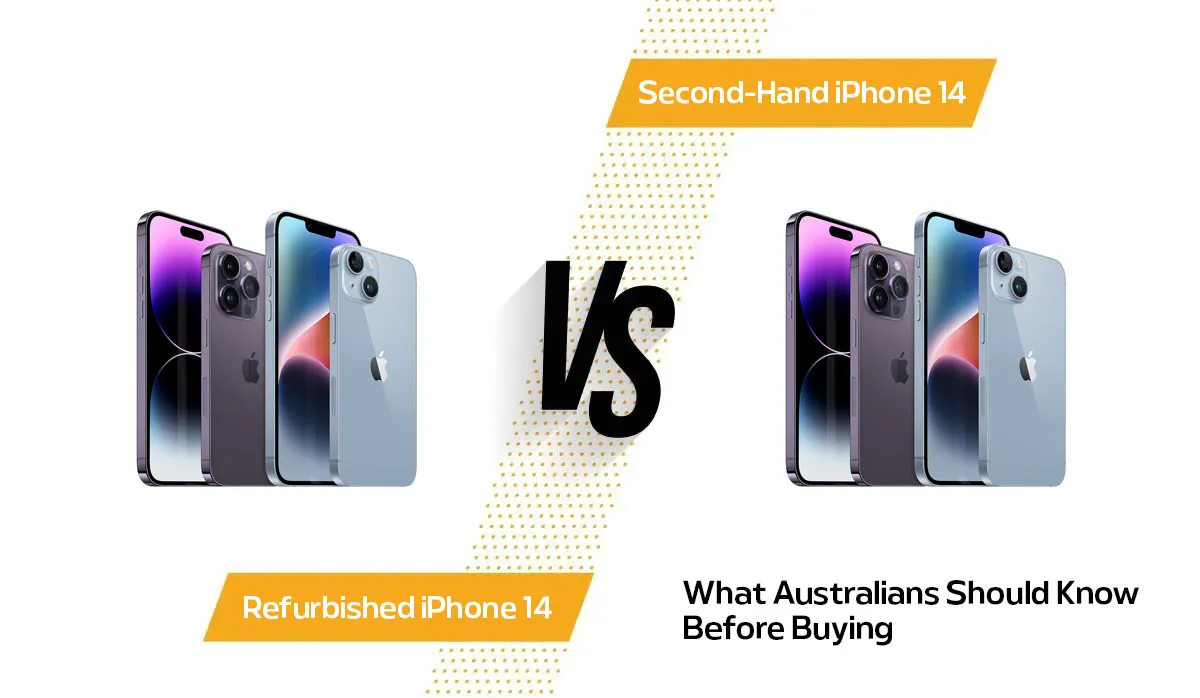
With iPhone 14 now over 3 years old, more units are entering the resale market than ever before. Knowing the difference between refurbished and second-hand helps you avoid hidden faults, battery issues, and devices with no warranty protection.
When searching for a pre-owned iPhone 14 in Australia, you will come across two terms used almost interchangeably: refurbished and second-hand. Many buyers assume they mean the same thing. They do not. The difference affects what you receive, how long it lasts, what happens if something goes wrong, and whether you are protected as a buyer.
Understanding this distinction before purchasing can save you from hidden problems, unexpected costs, and devices that fail months after buying. This guide explains what each term actually means in the Australian market, where the risks sit, and how to make a decision that works for your situation.
What Second-Hand iPhone 14 Actually Means
A second-hand iPhone 14 is a device sold by a previous owner in whatever condition they choose to describe. There is no standard definition. There is no required testing. There is no obligation to disclose faults unless they are directly asked about.
In Australia, second-hand phones are commonly sold through Facebook Marketplace, Gumtree, eBay private listings, and local classifieds. The seller might be someone upgrading to a newer phone, clearing out old devices, or, in some cases, moving a phone with problems they have not disclosed.
When you buy second-hand, you receive the phone as-is. The previous owner may have described it as "excellent condition" or "like new" based on their own judgment. There is no independent verification. The battery might be at 74% health. The screen might have been replaced with a third-party part. The phone might still be linked to someone else's Apple ID. You will not know until it arrives.
Private sales in Australia generally do not include warranty protection. Consumer guarantees under Australian Consumer Law apply to businesses, not individuals selling personal items. If the phone develops a fault two weeks after purchase, you have limited options for recourse.
Related Products
![Apple iPhone 14 Pro Max 5G (128GB) [Like New]](https://www.phonebot.com.au/image/cache/catalog/refurbished/apple/iphone-14/iphone-14-pro/apple-iphone-14-pro-purple-200x170.jpg "Apple iPhone 14 Pro Max 5G (128GB) [Like New]")
ONLY 1 LEFT
![Apple iPhone 14 Plus 5G (256GB) [Like New]](https://www.phonebot.com.au/image/cache/catalog/refurbished/apple/iphone-14/iphone-14-plus/midnight-200x170.jpg "Apple iPhone 14 Plus 5G (256GB) [Like New]")
ONLY 1 LEFT
ONLY 1 LEFT
ONLY 1 LEFT
![Apple iPhone 14 Pro 5G (512GB) [Grade A]](https://www.phonebot.com.au/image/cache/catalog/refurbished/apple/iphone-14/iphone-14-pro/Iphone-14-pro-200x170.jpg "Apple iPhone 14 Pro 5G (512GB) [Grade A]")
What Refurbished iPhone 14 Actually Means
A refurbished iPhone 14 is a pre-owned device that has gone through a structured restoration process before being resold. The device is tested, graded, repaired if necessary, data wiped, and prepared to function as expected from day one.
Reputable refurbishers follow a defined inspection process. At Phonebot, this includes a 72-point diagnostic check covering all physical buttons, speakers, microphones, cameras, Face ID, sensors, charging functionality, wireless connectivity, and display condition. Devices that fail any part of this process are not listed for sale.
Battery health is measured and disclosed. Cosmetic condition is graded using a transparent system so buyers understand exactly what to expect. The device is factory reset, ensuring no previous owner data remains and no activation locks exist.
When you buy a certified refurbished iPhone 14, you are purchasing a device that has been thoroughly verified to function correctly, not one sold based on a single person's opinion of its condition.
Testing and Quality Control Differences
The core difference between second-hand and refurbished comes down to verification.
A second-hand seller might tell you the phone works perfectly. They may believe that. But without diagnostic testing, neither of you actually knows the full picture. Intermittent faults, degraded components, and hidden damage do not always present themselves during casual use.
Common issues that go undetected in second-hand sales include:
Microphone problems that only appear during calls in certain conditions. Speaker distortion that shows up at higher volumes. Face ID sensors that work inconsistently. Battery cells that hold charge normally but drain rapidly under load. Wireless connectivity issues that surface in specific network environments.
Professional refurbishment catches these problems before the device reaches a buyer. Each function is tested individually. Devices with faults are either repaired to standard or removed from sale entirely.
This is not about one approach being more ethical than another. Private sellers are not trying to deceive buyers. They simply do not have access to the diagnostic tools and processes that identify hidden issues. Refurbishment exists specifically to close that gap.
Battery Health and Long-Term Performance
Battery condition is one of the most misunderstood aspects of buying a pre-owned iPhone.
Every lithium-ion battery degrades over time. After two years of typical use, an iPhone 14 battery might sit anywhere between 80% and 92% of its original capacity, depending on how the previous owner charged and used the device. This number directly affects how long the phone lasts between charges.
Apple considers 80% battery health the threshold below which performance may be affected. An iPhone 14 with 78% battery health will still function, but you will notice shorter usage time and potentially throttled performance during intensive tasks.
Second-hand sellers are not required to disclose battery health. Some do. Many do not. If the listing does not mention it, you are buying blind on one of the most important indicators of remaining device lifespan.
Refurbished sellers test and report battery health as part of the grading process. At Phonebot, devices are listed with battery health of 80% or above, and the specific percentage is visible on each product listing. You know what you are getting before you buy.
For an iPhone 14 purchased in late 2025 or 2026, battery health matters more than it would for a one-year-old device. The phone is now over two years old from its original release. Buying without verified battery information increases your risk of needing a replacement within the first year of ownership.
Warranty, Returns, and Buyer Protection
Warranty is where the gap between second-hand and refurbished becomes most significant.
Private sales in Australia typically include no warranty. If the phone stops working three weeks after purchase, your options are limited to asking the seller for a refund, which they are not legally obligated to provide, or paying for repairs yourself.
Refurbished devices from established sellers include warranty coverage. At Phonebot, every device in our refurbished Apple iPhone collection comes with a 12-month warranty covering defects in materials and workmanship. If something fails due to a fault, it gets repaired or replaced.
Beyond warranty, refurbished purchases typically include a returns window. A 30-day change of mind policy allows you to evaluate the device in person and return it if it does not meet your expectations. Second-hand purchases rarely offer this option. Once the money changes hands, the transaction is usually final.
Australian Consumer Law provides guarantees when purchasing from a business, including the right to a repair, replacement, or refund for products with major faults. These protections do not extend to private sales. Buying refurbished from a registered business means buying with legal protections that private sales cannot match.
Real Price Difference and Value
Second-hand prices often appear lower than refurbished prices at first glance. This makes sense on the surface. A private seller has no overheads for testing, grading, warranty support, or customer service. They can price the phone lower and still walk away satisfied.
But the upfront price does not reflect the total cost of ownership.
A second-hand iPhone 14 purchased for $480 with undisclosed battery degradation might need a $120 battery replacement within six months. A device with a faulty speaker discovered after purchase adds another repair cost. If the phone has a major fault covered by nobody's warranty, you are facing either significant repair bills or a device that does not work as expected.
A refurbished iPhone 14 purchased for $550 with verified battery health, tested components, and 12-month warranty coverage includes those assurances in the price. If something fails, it gets handled. The price reflects the reduced risk.
When comparing prices, factor in what happens if something goes wrong. The cheapest purchase price is not always the cheapest total cost.
Risks That Second-Hand Buyers Often Miss
Beyond the obvious concerns about condition and warranty, there are risks specific to second-hand phone purchases that many buyers do not consider until they encounter them.
Activation Lock is Apple's theft deterrent system. If the previous owner did not properly sign out of their Apple ID before selling, the phone may be locked to their account. You cannot set up the device without their credentials. In some cases, sellers disappear after the sale, leaving buyers with an unusable phone and no recourse.
Reputable refurbishers verify that every device is free from activation locks before listing. The phone is factory reset and ready for a new owner to sign in with their own Apple ID.
Unreported damage is another common issue. A phone might have been dropped, water-damaged, or previously repaired with non-genuine parts. Cosmetic damage is usually visible, but internal damage from drops or liquid exposure may not present symptoms immediately. These issues can surface weeks or months later as component failures.
Stolen devices occasionally appear in second-hand markets. A phone reported stolen by its original owner can be blacklisted by carriers, making it unusable on Australian networks even if it was working when purchased. Refurbished sellers check IMEI status against blacklist databases before listing devices for sale.
Who Should Consider Refurbished Instead of Second-Hand
Refurbished is not the right choice for every buyer in every situation. But for most Australians purchasing a pre-owned iPhone 14 for regular daily use, it reduces risk in ways that matter.
Consider refurbished if:
You want a phone that has been tested and verified to work correctly. You value warranty protection in case something fails. You prefer transparent grading so you know the cosmetic condition before buying. You do not want to deal with activation locks, undisclosed faults, or missing accessories. You plan to use the phone as your primary device for two or more years.
Second-hand might work if:
You are buying from someone you know and trust personally. You can inspect the device in person before paying. You are comfortable accepting the risk of no warranty and no returns. The price difference is significant enough to justify that risk. You have the technical knowledge to identify faults yourself.
For most buyers, particularly those purchasing online without the ability to inspect the device first, refurbished offers a level of assurance that second-hand cannot match.
Making the Right Decision
The question is not whether second-hand phones are bad or refurbished phones are good. Both markets exist because they serve different buyers in different situations.
The question is whether you understand what you are buying and what protections you have if something goes wrong.
A second-hand iPhone 14 is a transaction between two individuals with no intermediary verification. The phone might be perfect. It might have issues. You are accepting that uncertainty in exchange for a potentially lower price.
A refurbished iPhone 14 is a device that has been through a structured process designed to identify and resolve problems before they reach you. The testing, grading, warranty, and returns policy exist specifically to reduce the risk that comes with buying pre-owned.
If you are looking for a pre-owned iPhone 14 with verified condition, tested functionality, and warranty coverage, refurbished is the right path. Every device at Phonebot is 72-point tested, graded transparently, and backed by a 12-month warranty with 30-day returns.
For buyers who want the iPhone 14 experience without new-device pricing and without the uncertainty of private sales, refurbished is the middle ground that makes sense.
Posted by Liam Harris


Liam Harris
Liam Harris is a tech writer at Phonebot, covering refurbished phones, tablets and wearables since 2022. His buying guides and model comparisons draw on live Australian market pricing and Phonebot's experience rehoming over one million devices.




 Google
 Apple
Apple Facebook