
 Sign in with Facebook
 Sign in with Google
 Sign in with Apple


Can You Trade In a Phone with a Cracked Screen or Damage?
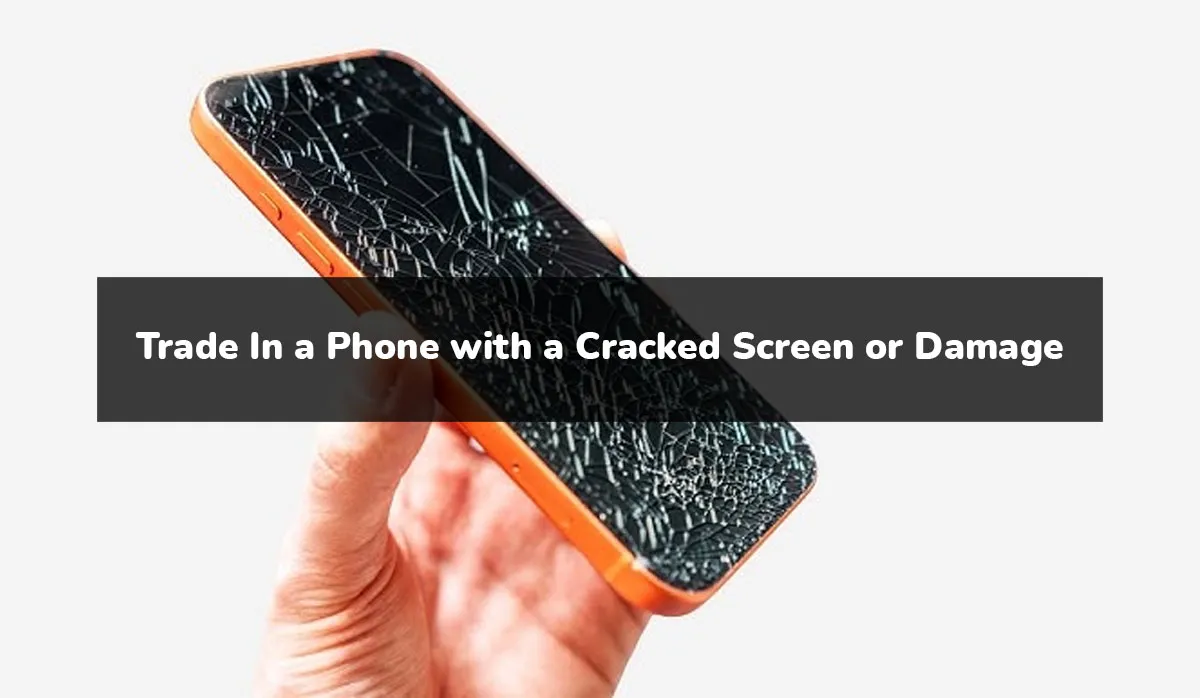
Quick answer: Yes, you can trade in a phone with a cracked screen. The damage lowers your offer, typically by a meaningful proportion of the device's value depending on model and severity, but it doesn't disqualify the device. Cracked screens, shattered panels, water damage, faulty batteries, and devices that won't power on are all still quoted at a reduced value, and return postage is free if you decline the offer. Get a trade-in quote for your damaged phone.
Damaged phones still hold real value. The display, battery, camera modules and mainboard can all be reused, and a device with a shattered screen is still worth considerably more than one sitting unused in a drawer.
Here's how a cracked screen affects your offer, what other faults change, and what's worth sorting out before you send it in.
Damage and wear are assessed differently
These get treated as separate things, and it's worth understanding which category your device falls into.
Normal wear is what any used phone accumulates: light scratches on the frame, small marks on the back, minor scuffs around the ports. This is expected on a device that's been in a pocket for two years, and it has limited effect on the offer.
Damage is a specific fault that affects the device's function or requires a part to be replaced: a cracked display, shattered back glass, a bent frame, a failed camera, water ingress, or a battery that no longer holds usable charge.
The distinction matters when you request a quote. Selecting "good condition" for a device with a cracked screen means the initial figure won't hold, and the offer will be revised after assessment. Selecting the accurate condition up front means the number you're quoted is the number you get.
How much does a cracked screen reduce your offer?
A cracked screen is the most common fault we see, and usually the largest single reduction to an offer. The display assembly is the most expensive component to replace on most modern handsets, so the deduction reflects what it costs to bring the device back to resale condition.
How much depends on two things: the model and how bad the crack is.
- Hairline crack, full touch response. The smallest reduction. The device is fully usable and the panel may not need replacing at all.
- Visible cracks, screen still works. A moderate reduction. The panel will be replaced, but nothing underneath is affected.
- Shattered panel, dead touch zones or display lines. The largest reduction. Damage at this level can extend past the glass into the digitiser or the display itself.
- Screen won't display at all. Assessed cautiously, because the device can't be fully tested until the panel is replaced.
Newer flagship models carry higher replacement costs in absolute terms, but they also start from a higher value, so the proportional impact is often smaller than on an older handset. On older devices, where the total value is lower but the screen cost isn't, a cracked display takes a bigger share of what the phone is worth.
Screen burn-in and dead pixels are assessed as display faults too, even where the glass itself is intact.
How other faults affect the offer
Back glass and frame
Cracked rear glass reduces the offer, though generally less than a damaged display. On models where the back panel is bonded to the chassis, replacement is more involved and the reduction is larger.
A bent or heavily dented frame is more serious than it looks. Frame distortion can affect how the display sits and whether the device still seals, so it's assessed as a structural fault rather than cosmetic damage.
Battery
A degraded battery is one of the more forgiving faults. Batteries are consumable, and a device that's had heavy use will show reduced maximum capacity, which is expected rather than exceptional.
Battery health is measured as a percentage of original capacity, alongside cycle count. Devices below the usual 80% threshold, or showing a service message, are quoted with a battery replacement factored in. If you want the detail on how that measurement works, our guide to how battery health is measured covers it.
Cameras, buttons and ports
A failed camera module, a cracked lens cover, unresponsive buttons, a faulty charging port or a dead speaker each reduce the offer by a smaller amount individually. Several together add up, and a device with multiple functional faults is assessed differently from one with a single isolated problem.
Water damage
The most consequential fault, and the least predictable. Modern phones carry a Liquid Contact Indicator inside the SIM tray or port that turns from white to pink or red on contact with liquid, and it's the first thing checked during assessment.
Water damage matters more than the visible symptoms suggest, because corrosion on the mainboard can develop over weeks or months after the exposure. A device that seems to be working normally after a spill may still have internal damage that only surfaces later, which is why liquid-exposed handsets are assessed conservatively.
Be upfront about liquid exposure when you request your quote, even if the device currently works. It will be identified during assessment, and declaring it means the initial offer is accurate rather than being revised.
Devices that don't power on
A phone that won't turn on can't be diagnostically tested, so its condition can't be confirmed. These are quoted cautiously, but they still hold component value, and a non-powering device is not worthless.
Should you repair it before trading in?
Usually not, and the arithmetic is fairly consistent.
A third-party screen replacement typically costs more than the amount it adds back to a trade-in offer. You spend money on the repair, wait for it to be done, and recover less than you spent. On older models, where the device's total value is lower but the repair cost isn't, the gap is wider still.
There's a second issue specific to iPhones. Replacement displays and batteries that aren't genuine parts are flagged in the device's Parts and Service History, and iOS displays a non-genuine part message in settings. That flag stays with the device permanently and affects its assessed value. A phone repaired with an aftermarket screen can be worth less than the same phone with the original cracked screen still fitted.
If the device is already repaired, that's fine. Just declare the repair when you request your quote so the assessment matches what you've described.
What matters regardless of condition
Three things affect your payout independently of physical damage, and two of them can reduce it to nothing.
Activation Lock. An iPhone with Find My still enabled can't be set up by anyone else. The same applies to Android devices with Factory Reset Protection tied to a Google account. A locked device is unusable regardless of its physical condition, and it's assessed accordingly. This is the single most common reason a trade-in returns a zero payout, and it's entirely avoidable. Our guide to preparing your iPhone for trade-in walks through turning it off.
IMEI status. Every device is checked against the AMTA register. A handset reported lost or stolen, or blocked for unpaid contract debt, can't be traded in. Check your IMEI by dialling *#06# and confirm it's clear before you send anything.
Carrier lock. A network-locked device is worth less than an unlocked one, because it can only be resold to customers on that network. If your device is locked and the contract is complete, your carrier can usually unlock it, and it's worth doing before you request a quote.
Get the condition right when you quote
The most common source of frustration in any trade-in isn't the offer. It's an offer that changes after the device arrives.
That happens when the condition selected at the quote stage doesn't match the device that turns up. Being accurate about damage costs you nothing, because the assessment will find it either way. What it buys you is a quoted figure you can rely on.
Describe the worst of it, not the best. If the screen is cracked and the battery is degraded and the back glass is chipped, select all three. A quote based on a complete description is a quote that holds.
If the offer changes after inspection
If assessment finds something that wasn't declared, we contact you before anything is finalised. You have two options: accept the revised offer and be paid, or decline it and have your device returned to you free of charge.
You're never committed to a figure you didn't agree to, and declining doesn't cost you anything. Return postage is covered either way.
Damaged phones and private sale
Damage is where the case for selling privately is weakest.
Private buyers are generally reluctant to take on a faulty handset at all, because they have no way to assess what else might be wrong with it and no recourse if something surfaces later. The ones who will buy damaged devices tend to be resellers making deliberately low offers, which puts you in the same position as a trade-in but with the listing, negotiating and meeting still to do.
There's also a post-sale risk that's specific to damaged devices: a buyer who discovers a further fault after handover and comes back demanding a partial refund. In a private sale there's no process for resolving that. We've covered the full comparison in trade-in compared with selling privately.
Before you send it
Same steps as any trade-in, damaged or not:
- Back up your data. Assessment and processing can result in data loss, and there's no way to recover it afterwards.
- Sign out of your accounts: iCloud, Google, and any others tied to the device.
- Turn off Find My or Factory Reset Protection.
- Factory reset the device.
- Remove your SIM card and any memory card.
- Protect the screen in transit. If the display is already cracked, a strip of tape across it stops loose glass from shifting inside the packaging.
If the screen is too damaged to navigate the reset process, you can remove the device from your account remotely, through iCloud.com for an iPhone, or your Google account for an Android device.
Bottom line
Damage reduces what you're offered. It doesn't rule your device out.
Describe the condition accurately, sort out Activation Lock and IMEI status before you send, and skip the repair, because on most damaged handsets it costs more than it returns. What you're left with is a device that still has real value, handled through a process where the number is agreed before anything happens.
If you're replacing the device, taking your payout as store credit rather than cash increases its value, and it can be put straight toward a refurbished phone.
You can check what your device is worth in a couple of minutes, or read how the iPhone trade-in process works end to end.
Posted by Liam Harris


Liam Harris
Liam Harris is a tech writer at Phonebot, covering refurbished phones, tablets and wearables since 2022. His buying guides and model comparisons draw on live Australian market pricing and Phonebot's experience rehoming over one million devices.


 Google
 Apple
Apple Facebook