
 Sign in with Facebook
 Sign in with Google
 Sign in with Apple


What Happens to Your Phone After You Trade It In?
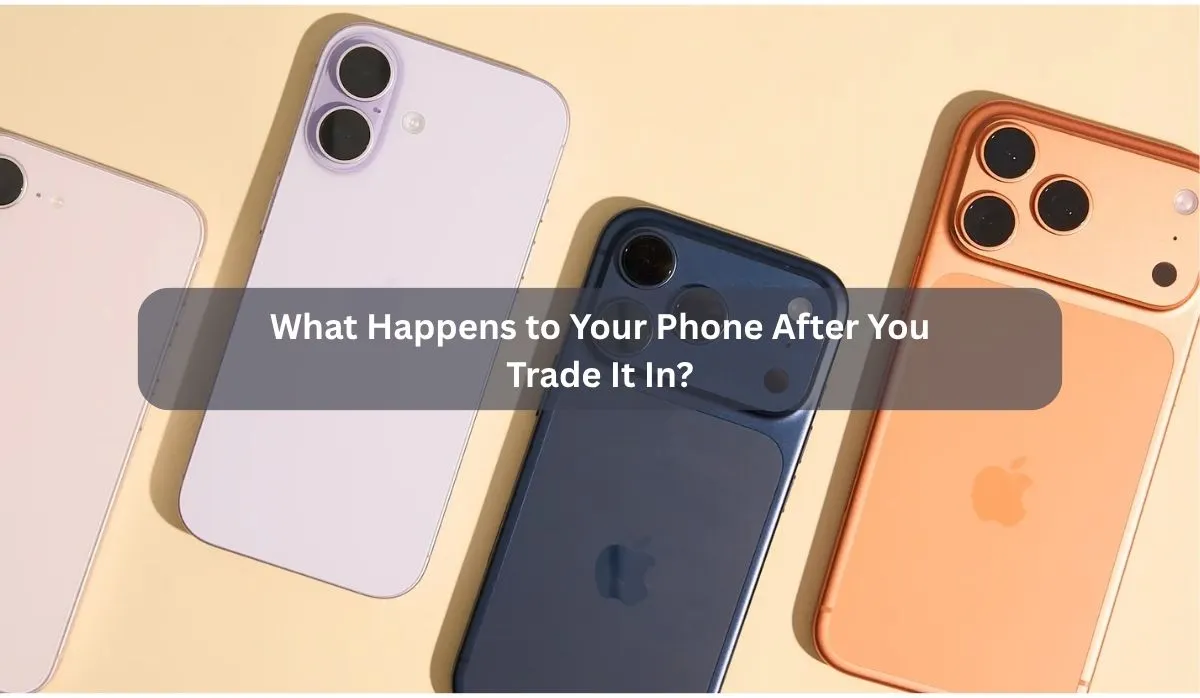
Quick answer: Your device is received at an Australian facility, checked against the IMEI register, and diagnostically tested. Your data is already unrecoverable if you factory reset the device before sending it, because modern phones encrypt their storage and a reset destroys the key. The handset is then repaired if needed, graded on cosmetic condition, and resold as a refurbished device with a warranty. Phones too damaged to resell are stripped for parts or recycled rather than sent to landfill.
Most people think about a trade-in up to the point the money arrives. What happens next is worth understanding, partly because it explains how your offer was calculated, and mostly because it answers the question sellers actually worry about: what happens to everything that was on the phone.
Is your data safe when you trade in a phone?
This is the part that matters most, so it goes first.
Every iPhone since the 3GS, and every Android device shipped with Android 6.0 or later, encrypts its storage by default. Your files are not stored in a readable form. They are stored encrypted, and the key needed to read them is protected by your passcode and held in dedicated hardware on the device.
When you perform a factory reset, the device destroys that key. The encrypted data may physically remain on the storage chip for a while, but without the key it is unreadable. It is not deleted so much as rendered permanently meaningless. This is why a modern factory reset takes seconds rather than the hours a genuine full-drive wipe would need.
The practical consequence: if you reset your phone before sending it, your photos, messages, accounts and files are already beyond recovery by the time anyone else handles the device. No recovery software gets around a destroyed encryption key.
What you need to do before sending your phone
Encryption protects your data. It does not detach the device from your accounts, and that is a separate problem.
- Sign out of iCloud or your Google account before resetting.
- Turn off Find My on an iPhone to release Activation Lock, or turn off Factory Reset Protection on an Android device.
- Remove the SIM card and any memory card.
- Unpair a paired watch if you have one.
A device that arrives still linked to an account cannot be set up by anyone, which reduces the payout to nothing. Our guide to preparing your iPhone for trade-in covers each step in order.
If your screen is too damaged to navigate, you can remove the device from your account remotely through iCloud.com or your Google account page.
What happens if you forget to reset your phone
Devices that arrive without being reset go through a data wipe as part of the intake process. Data sanitisation is a standard step, not a favour, and it happens before the handset goes anywhere near assessment or resale.
Resetting it yourself is still the better option, because it means your data was destroyed while the phone was in your hands rather than someone else's. Phonebot does not retain, recover, or create backups of customer data at any stage.
Step 1: IMEI check and device verification
When your device arrives at our Melbourne facility, three things happen before anything else.
The IMEI is checked. Every handset is verified against the AMTA register, the national database of devices reported lost, stolen, or blocked for unpaid contract debt. A blocked device cannot be resold on any Australian network, so this check happens first.
The device is identified. Model, storage capacity, colour and carrier lock status are confirmed against what was declared at quote stage.
Condition is recorded. Physical condition is documented before testing begins, which is what the offer was based on.
Step 2: How your phone is tested after trade-in
The device then goes through a functional test covering every component that affects whether it can be resold.
- Display: touch response across the full panel, dead pixels, burn-in, colour uniformity
- Battery: maximum capacity as a percentage of original, cycle count, service warnings
- Cameras: front and rear, each lens, focus and stabilisation
- Audio: speakers, earpiece, microphones
- Connectivity: cellular, Wi-Fi, Bluetooth, GPS, NFC
- Biometrics: Face ID or fingerprint sensor
- Ports and buttons: charging, volume, power, mute switch
- Liquid Contact Indicator, and any sign of prior water ingress
- Repair history, including the Parts and Service History record on an iPhone and whether non-genuine parts have been fitted
This is where a declared condition either matches or does not. If testing finds something that was not disclosed, we contact you with a revised offer. You can accept it, or decline and have the device returned free of charge.
It is also why an accurate description at quote stage matters. If you are unsure how a specific fault is treated, our guide to trading in a phone with a cracked screen covers how damage affects an offer.
Step 3: Repair and refurbishment
Most traded-in devices need something. A battery below the acceptable threshold is replaced. A cracked display is replaced. Failed cameras, ports and buttons are repaired or swapped out.
Every iOS device we sell has its battery replaced by default if it falls below acceptable health, so that each device leaves with a minimum of 80% capacity. That single step is often the difference between a phone that feels like a compromise and one that feels new.
The device is then cleaned, reassembled, retested against the same diagnostic checklist, and its software restored to a clean current version. We have written up the full process in how refurbished phones are tested and restored.
Step 4: How traded-in phones are graded
Once the device is functionally sound, it is graded on cosmetic condition alone. Grading describes appearance, not function. Every graded device is fully working.
A device with light frame wear grades differently from one with visible scratches on the back, even though both perform identically. That grade determines its listing price, and it is the reason two apparently identical handsets can sell at different prices. Our explanation of what each refurbished grade means sets out the differences.
Step 5: Your phone is resold as a refurbished device
The device is listed as a refurbished handset, with a warranty of up to 12 months covering mechanical and electrical failure, and consumer guarantees under Australian Consumer Law on top of that.
This is the part that connects the two halves. The phone you traded in becomes someone else's refurbished phone, tested and warranted, at a fraction of what the same model costs new. If you are buying a replacement, the device you receive went through exactly the process described above.
What happens to phones that can't be resold?
Not every handset makes it through. Severe water damage, board-level faults, structural damage and devices blocked on the AMTA register are all beyond economic repair.
These are not discarded. Working components are recovered and used in other repairs, which is where a phone with a shattered screen but a healthy mainboard ends up doing useful work. What remains goes to accredited e-waste recycling for material recovery.
Australia generates a substantial volume of electronic waste each year, and mobile phones contain gold, silver, copper, palladium and rare earth elements that are worth recovering and environmentally damaging to send to landfill. MobileMuster, the mobile industry's official product stewardship programme, is the accredited national scheme for mobile phone recycling in Australia, and free drop-off points are available through Australia Post outlets and participating retailers if you have old handsets that are not worth trading in.
This is what a circular economy looks like in practice. A traded-in phone stays in circulation either as a working device or as recovered parts and materials. A phone in a drawer does neither.
Why your trade-in offer is lower than the resale price
Every step above costs something. Testing takes technician time. Parts cost money. Warranting a device means carrying the risk of it failing. Holding stock until it sells has a cost of its own.
That is the gap between what you are offered and what the device eventually lists for. It is not a markup on nothing. It is the cost of turning a used phone into one that another person can buy with a warranty behind it.
It is also the reason a private sale usually shows a higher number, and why that number is not the whole comparison. We have set out both sides in trade-in compared with selling privately.
Ready to see what your phone is worth?
Every device follows the process above: verified against the IMEI register, tested at our Melbourne facility, and quoted before you commit. Free postage, payment within 24 hours of verification, and a free return if you decline the offer.
Bottom line
Reset your device before you send it and your data is gone, permanently, before anyone else touches the phone. What follows is verification, testing, repair, grading and resale, and a device that would otherwise sit unused goes back into circulation with a warranty attached.
If you want to see where your device fits, read how the iPhone trade-in process works from the seller's side.
Posted by Liam Harris


Liam Harris
Liam Harris is a tech writer at Phonebot, covering refurbished phones, tablets and wearables since 2022. His buying guides and model comparisons draw on live Australian market pricing and Phonebot's experience rehoming over one million devices.



 Google
 Apple
Apple Facebook